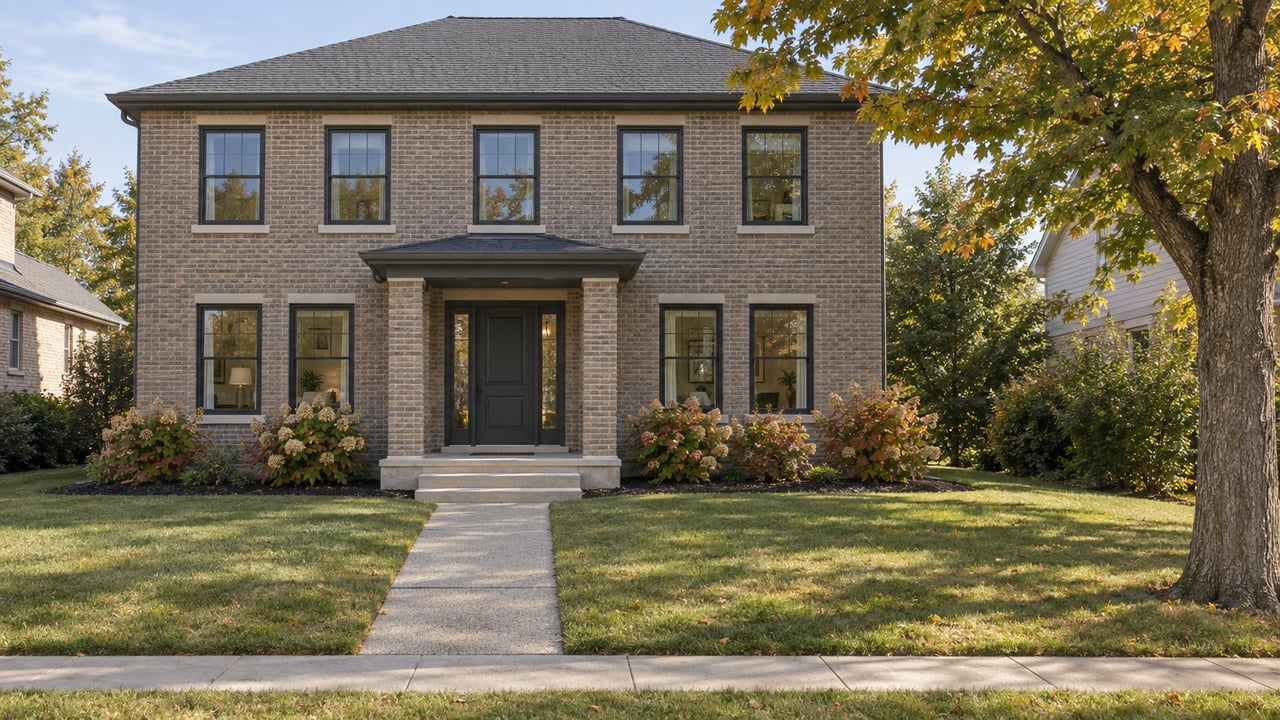
Mount Juliet Cut Its Tax Rate by a Penny. So Why Are Bills Going Up?
October 8, 2026
October 8, 2026
"Notice of Intent to Exceed the Certified Tax Rate. The Board of Commissioners of the City of Mt. Juliet will conduct a public hearing on June 22, 2026, at 6:15pm, on the City's intent to exceed the certified (tax neutral) property tax rate."
That legal notice ran in the week of June 10, 2026. It set the certified rate at $0.1776 per $100 of assessed value and said the city's proposed FY 2027 budget would require a levy of $0.28. Most of the coverage that followed went with a simpler story. Mount Juliet had cut its rate from 29 cents to 28 cents. Both things happened. The second only makes sense next to the first, and a buyer looking at Mount Juliet this fall needs both.
Wilson County's 2026 reappraisal found home values had risen an average of 66% since the previous one. When assessments jump that much, Tennessee resets each jurisdiction's "certified" rate. That's the rate that brings in the same revenue as the year before. For Mount Juliet, that line came in at roughly 17.76 cents. The city adopted 28. A one-cent cut from last year's rate is still about 10 cents above revenue-neutral.
This is where it gets practical for anyone under contract right now. Mount Juliet and Wilson County mail their tax notices in October. The city bill and the county bill are separate, and each one gets paid to its own office. The City of Mt. Juliet's property tax FAQ says taxes are payable from October 1 through the last day of February and go delinquent March 1. For the 2026 tax year, that means payment by February 28, 2027.
Tennessee property taxes cover the calendar year and are paid in arrears. So the customary practice at closing is to prorate the current year's bill. The seller covers January 1 through the day before closing, usually as a credit to the buyer, because the buyer will pay the full annual bill later. If the seller has already paid, the buyer may reimburse the seller instead. According to Atlantic Title Firm, your purchase contract controls which method applies.
A closing this fall or winter runs into three timing problems:
Wilson County did what the reappraisal formula expects. It adopted $1.1657 per $100, which was the certified rate, down from $1.91. The county assessor's office described the effect plainly. If your home's value rose more than 66%, your taxes go up. If it rose less, they go down. For a home that tracked the countywide average, the county bill comes out close to where it was.
The city half works differently. Here's the arithmetic for a home whose value rose exactly 66%. Under the old assessment at 29 cents, every $100 of old assessed value cost 29 cents. That same $100 of old value is now $166 of new assessed value, taxed at 28 cents, which comes to about 46.5 cents. For that average home, the city line goes up roughly 60% while the county line stays about where it was.
FOX 17 estimated the city increase at about $75 a year for a $300,000 home. The table below carries the same math to other values. Tennessee taxes homes at 25% of appraised value. These numbers are illustrations, not a quote on any particular property.
| 2026 appraised value | Assessed (25%) | City tax at certified $0.1776 | City tax at adopted $0.28 | Gap | County tax at $1.1657 |
|---|---|---|---|---|---|
| $300,000 | $75,000 | $133 | $210 | $77 | $874 |
| $500,000 | $125,000 | $222 | $350 | $128 | $1,457 |
| $700,000 | $175,000 | $311 | $490 | $179 | $2,040 |
In dollars, the city portion is still the smaller of the two bills. Mayor James Maness pointed out that 28 cents "is still the lowest in Wilson County." The size of the bill isn't really the issue. The issue is direction. A buyer who estimates carrying costs from a 2025 bill is working from a city rate that has nearly tripled from the 11 cents the city charged for years. FOX 17 puts the current rate at roughly 155% above that level, while noting that no single homeowner's total bill rose by that much.
City leaders explained the rate in terms of growth. "No one wants to raise the rate, but when you sit there and look at the numbers, the numbers don't lie," District 4 Commissioner Jennifer Milele told WKRN. She said about 60% of the city budget goes to public safety. She also said the city could not keep drawing on cash reserves and borrowing to cover the gap, because "revenues aren't keeping up with the demand, with the growth."
The FY2027 budget is $65 million, down from $71.1 million the year before. It passed 4-1. Finance Director Dana Hire said the 28-cent rate brought the projected deficit down to $500,000. Between first and final reading, $3 million from the Capital Projects Fund went into the budget to pay for utility relocation on the Golden Bear widening, from Jackson Hills to Curd Road. District 3 Commissioner Scott Hefner, the lone no vote, said the road itself would cost $20 million, which the city doesn't have yet. Public Works Director Matt White said the project could be ready to start in 2028.
The other road project buyers ask about is further out. Mount Juliet secured a $24.6 million federal grant for a new I-40 interchange at Central Pike, with the hope of moving the schedule from 2031 up to 2029. TDOT's project page currently shows preliminary engineering underway, with interchange construction scheduled for fiscal year 2029 and the widening to Mt. Juliet Road for fiscal year 2030. A buyer closing in 2026 starts paying the current rate before construction on either project is scheduled to begin.
Right now the rate is the city's main tool. That's because, under the Home Rule Charter voters adopted in 2006, Mount Juliet can't require developers to pay toward long-term infrastructure like roads, sewers, stormwater systems, and parks. Contributions are voluntary. About 19,000 people lived in the city when the charter was adopted. The population is now about 45,000.
On September 28, 2026, commissioners voted unanimously to spend $75,000 on a consultant study of what an impact fee program could look like. On November 3, voters will decide whether to repeal Home Rule. Repeal wouldn't create a fee by itself. It would give the city the authority to ask the state legislature for a mandatory impact fee program, according to the Mt. Juliet Journal. Milele has made the case directly: "Under home rule really our hands are tied, because we can't ask for private acts. Right now, we mostly rely on sales tax and property taxes."
For a buyer, the vote decides where future growth costs land. They can keep landing in the rate every owner pays, or some share can move to a fee on new construction. The outcome won't be settled on election night, since a fee program would still need state legislative approval. If you're comparing a resale with a new build, that open question belongs in the comparison. Three public information sessions are scheduled before the vote:
Demand hasn't slowed while all this plays out. Greater Nashville Realtors reported that in August 2026, Wilson County closings on homes listed above $400,000 rose 19% from a year earlier, while sale prices rose 1%. With prices that flat, the recurring cost of owning, taxes included, makes up more of the real difference between one home and another.
If the seller has a senior tax freeze, does the buyer inherit it? The Tennessee Comptroller's Office says the freeze applies to the owner, not the house. The state program requires applicants to own the home as a principal residence, be at least 65 by year-end, fall under the local income limit, and apply each year. It freezes the tax amount, not the rate. That means a seller's frozen bill can run lower than what a new owner will pay.
Does Mount Juliet offer its own freeze? Yes. Mount Juliet's 2026 handout lists a tax freeze for owners 65 and older with a $63,470 income limit. It also lists a separate Tax Relief program for owners 65 and older, disabled owners, and totally and permanently disabled veterans, with a $38,470 income limit. Applications for the 2026 tax year are accepted through April 5, 2027. Confirm eligibility with the city or a tax professional.
Were the lower rates reported in May final? No. NewsChannel 5's May figures of $1.1631 for the county and 17.75 cents for the city were preliminary. The adopted rates for 2026 are $1.1657 for Wilson County and 28 cents for Mount Juliet.
If you're looking in Mount Juliet this fall, ask for the 2026 city and county bills as well as the 2025 ones, and let's run the proration on the numbers you'll actually be paying. Robert Werkheiser can walk you through that math before you sign. Let's talk about your next move.
This article is general information, not legal, tax or financial advice. Consult a qualified professional about your situation.
Stay up to date on the latest real estate trends.


Get assistance in determining current property value, crafting a competitive offer, writing and negotiating a contract, and much more. Let Robert guide you through your home-buying journey.

ZEITLIN SOTHEBY'S INTERNATIONAL REALTY
4301 HILLSBORO PIKE NASHVILLE TN 37215